M-Pesa makes rent payments convenient, but accurate records still matter. With property management in Kenya, each M-Pesa payment should be matched to the tenant and rental period, then recorded for tracking and owner reporting. Consistent follow-up helps identify unpaid rent and keep accounts up to date.
A digital payment can simplify rent collection, but it still requires clear instructions, careful reconciliation and a process for missed or misrecorded payments. Tenant screening, written lease terms and an effective repair process are just as important to smooth property operations.
This guide explains how M-Pesa rent collection works, what tenant screening and lease administration involve, how repairs are handled, and what property management services can cover in Kenya. It also outlines how these tasks fit together, what to consider when choosing management support and how to take the next step for your rental property.
Key Takeaways
- Match M-Pesa payments to the right tenant and rental period to keep rent records clear and spot arrears.
- Use consistent tenant screening and written lease terms to set expectations and manage tenancy changes.
- Organise inspections, repair requests and maintenance records to protect the property and address issues promptly.
- Understand which day-to-day tasks a property manager can handle, and when management, valuation or sales support may help.
How does rent collection work with M-Pesa?
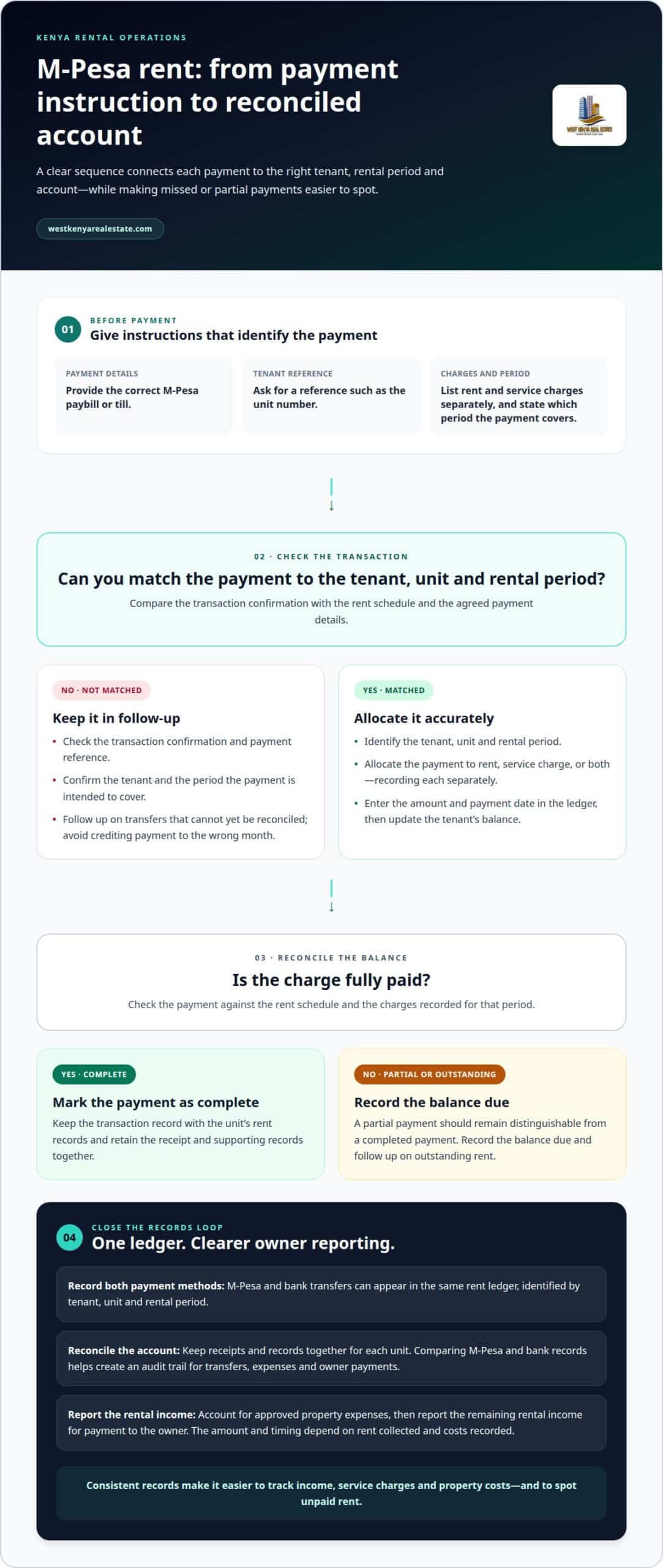
For a rental property, M-Pesa can make rent collection and recordkeeping part of a clear sequence. The manager matches each transaction to the tenant, rental period and account, then tracks any outstanding balance.
For automated collection, payment instructions should identify the correct paybill or till and include a tenant reference, such as a unit number. When payment arrives, match the transaction confirmation against the rent schedule. Record the amount and payment date in the ledger, along with any balance due. Reconciliation distinguishes completed payments from partial payments or transfers that need follow-up. Keep receipts and records together for each unit.
Rent and Service Charge Collection
List rent and service charges separately in payment instructions and account records. This makes it easier to see whether a tenant paid rent, the service charge or both. Record which period each payment covers to avoid crediting a payment to the wrong month.
For example, a tenant can pay using the agreed M-Pesa details and include the unit reference. The manager then allocates the payment to the correct charge and updates the tenant’s balance. Clear records help resolve questions about missed or partial payments without confusing rent with estate costs.
Financial Oversight and Owner Payments
Financial oversight includes rent collection, maintenance budgets, operating costs and timely mortgage or utility payments. A manager records income and expenses against the property, then reviews the account history to identify unpaid rent and upcoming costs. This gives the owner a practical view of cash flow, not just a list of deposits.
After reconciling payments, the manager accounts for approved property expenses and reports the remaining rental income for payment to the owner. The amount and timing depend on rent collected and costs recorded. In property management in Kenya, reconciling M-Pesa and bank records together helps create a clear audit trail for transfers, expenses and owner payments.
Bank transfers can provide another payment option alongside M-Pesa. Record both methods in the same rent ledger, identifying each payment by tenant, unit and rental period. Consistent records make it easier to track income, service charges and property costs across the estate.
Tenant screening and lease administration
A consistent leasing process connects tenant screening, clear agreements and a documented handover. Each step creates records that support communication across a rental portfolio.
Tenant Screening and Leasing
During leasing, the manager gathers an application, verifies the tenant’s identity and reviews information relevant to the tenancy. This may include references, income details and intended occupants. Apply consistent criteria to each applicant, then assess whether the proposed rent, household needs and tenancy terms align. Record the decision and keep the application with the property file.
Screening also involves explaining the rental terms before preparing an agreement. Tenants should understand the rent, payment method, service charges and process for reporting concerns. Clear explanations can prevent avoidable disputes after move-in. For a larger portfolio, follow consistent leasing steps while recording each unit’s specific details.
Tenant Agreement Preparation
A written tenant agreement sets out the terms both parties will follow. Include the property and parties, rent amount and due date, payment instructions, service charges, tenancy period and process for reporting maintenance requests. Explain how renewals and changes will be handled so the tenant knows which process applies.
Before signing, review the completed agreement with the tenant and clarify any unclear wording. Keep a copy with the property records, application and payment details. When renewing a tenancy, document the updated terms rather than relying on informal messages. Consistent records make leasing administration easier to follow.
Communication continues after signing. Set a clear channel for rent questions, repair reports and renewal discussions, then log each request and the action taken. A tenant self-service process can help residents submit routine requests and receive updates while preserving the issue history.
At handover, record the condition of rooms, fixtures and supplied keys with written notes and photographs. Both parties can refer to the same record when discussing a later repair or move-out. For rental owners who need help coordinating these steps, rental property management can bring screening, agreements and handover into one process.
Property maintenance and repairs
A maintenance process connects tenant reports, property inspections and completed repairs. In a residential property portfolio, recording each step helps owners monitor building condition and recurring issues.
Maintenance Service Requests
Log each request with the unit, date, reported issue and contact details. Ask the tenant to describe what happened and identify the affected area, such as a leaking kitchen tap or faulty corridor light. This gives the person assessing the work a clear starting point.
Review each request, arrange an inspection if needed and record the action taken. A simple status, such as received, being assessed or completed, helps tenants understand progress. Clear updates also support good relationships by showing that reports are handled consistently.
Property Repairs
Repairs should begin by identifying the cause, not just the visible damage. For example, inspect a damp patch for a leak before repainting. Record the affected materials, work required and repair outcome in the property file. This history helps distinguish a new fault from a recurring maintenance issue.
Prioritise an assessment of urgent problems, such as active water leakage, to limit further damage. Schedule routine faults according to their effect on the tenant and building. Record completed work and any follow-up inspection so the owner can track costs and property condition.
Planned inspections can reveal issues before tenants report them. A maintenance visit can cover visible plumbing, doors, windows, shared areas and exterior surfaces. Note each defect’s location and condition, then assign a next action. This creates a practical task list for the property instead of relying on memory.
Use the same request process for each unit, while recording details specific to that property. A leaking tap, blocked drain and damaged gate each require a different assessment and repair record. Consistent documentation helps owners spot recurring faults across an estate and prioritise maintenance.
Close a repair request only after recording the work and any required follow-up. Tell the tenant what was addressed and how to report a continuing problem. This final step keeps the repair history useful and supports clear communication among tenants, managers and owners.
Property management companies in Kenya
Property managers can handle tenant screening, leasing, rent collection, repairs and financial records. Landlords can compare these responsibilities with self-management before deciding whether to seek support.
Self-Managing Versus Hiring a Manager
Self-management means handling tenant communication, payment records, lease matters and maintenance coordination yourself. With a manager, agreed daily tasks are handled on your behalf while you retain ownership decisions. Compare the time each task takes, your distance from the property and how reliably you can respond to requests. Property management software can streamline records, but it cannot replace tenant follow-up or repair oversight.
Manager Charges
Management charges depend on the property and the work included. A fee may cover tasks such as tenant placement, rent administration, maintenance coordination and financial reporting. Compare the scope and how charges are calculated rather than treating different service packages as equivalent. Request a quote based on the property type and management tasks required.
Steps to Hire a Property Manager
Start by listing the tasks you want handled, such as leasing, rent records or repairs. Review the proposed service scope, reporting process and communication arrangements. Find out how tenant concerns and maintenance requests move from report to action. Then agree on responsibilities and payment terms in writing, and prepare the property records for handover. Property management in Kenya works best when the owner and manager understand who handles each task.
Property managers may also handle lease administration, tenant concerns, financial tracking and property upkeep. For landlords, common risks include unclear responsibilities, weak payment records and delayed follow-up on tenant or repair issues. Set reporting expectations and document who makes decisions about maintenance and tenant matters.
Need help managing your rental property? Discuss property management and the tasks you want covered.
West Kenya Real Estate: Management
West Kenya Real Estate Ltd provides property management for owners who need support overseeing rental property. Consider the service when coordinating tenants, property upkeep and ongoing management requires more time than you can give.
For decisions beyond day-to-day management, West Kenya Real Estate Ltd also offers valuation and sales assistance. A valuation can inform property decisions, while sales assistance is relevant when you plan to sell. Construction services are available for building projects, connecting property ownership with practical building work.
Share your property’s management needs and the tasks you want handled. West Kenya Real Estate Ltd can discuss the next step based on your requirements.
Contact West Kenya Real Estate Ltd to discuss management for your rental property.
Set a Clear Next Step for Your Rental
If you are considering property management in Kenya, start by defining the responsibilities you want handled and the decisions you want to retain. A clear brief keeps the discussion focused on your property and priorities.
Before starting a conversation, note the property’s occupancy, immediate operational needs and the reporting you expect. Identify plans that could affect ownership, such as construction work or a future valuation. These details help shape a practical discussion around your goals.
West Kenya Real Estate offers property management, construction and valuation services. Share your requirements to discuss the next step for your rental property. Outline the work you want managed and the decisions you prefer to oversee. A straightforward conversation can turn your priorities into a clear plan.
Contact West Kenya Real Estate to discuss your property needs. Start with your priorities and take the next step with confidence.
Frequently Asked Questions
How do I choose a reliable property management company in Kenya?
Choose a manager whose responsibilities, reporting and decision-making limits are clearly documented. Establish who approves repair work, how tenant complaints are escalated and which records you will receive. Ask for a written scope that covers the property’s specific needs, whether it is one apartment or several rental units. Clear records and defined authority make it easier to track the manager’s work.
What are the landlord and tenant rights and obligations in Kenya?
Landlord and tenant responsibilities depend on the tenancy terms and applicable Kenyan rules. The agreement should identify the property, payment terms, each party’s responsibilities and how notices or repair concerns are communicated. For example, tenants need a clear way to report a damaged door, and owners need a process for responding. Keep the signed agreement and related communications together.
What laws regulate property management and tenancy in Kenya?
Property management and tenancy are governed by applicable Kenyan property, contract and landlord-tenant rules. Requirements can depend on the property and issue, such as a tenancy agreement, maintenance concern or dispute. Do not rely on a generic clause to resolve a specific legal issue. For disagreements about rights or obligations, seek advice from a qualified Kenyan legal professional.
How does property management work for residential rentals across Kenya?
Residential management should reflect the needs of each building and tenancy across Kenya. A manager coordinates tenant matters, property upkeep and income records, while the owner sets decision limits and receives agreed reports. For example, a block of flats may need oversight of shared areas, while a standalone house may require more focus on its tenant and building.
How do property managers handle rent collection, deposits, and arrears in Kenya?
Managers record rent received, deposits held and unpaid balances against the relevant tenancy account. If arrears arise, they can identify the amount outstanding, document payment communications and follow the agreed escalation process. Deposit records should distinguish deposits from rental income and show subsequent transactions. Owners should receive a clear account history, with each entry traceable to its purpose and date.