The biggest construction company isn’t automatically the right one for your project. Choose a construction company in Kenya by matching its delivery model to your needs: with traditional contracting, you manage design separately; with design-build, one team handles both design and construction. The right fit depends on how much coordination and oversight you want to take on.
Compare more than quotes. The contract structure affects who coordinates design and construction, how decisions are made, and what you need to manage during the build. Comparing the same scope helps you judge practical fit rather than company size alone.
This guide explains Kenya’s construction sector, compares traditional contracting with design-build, and outlines what to consider when choosing a company for a residential or commercial project. It also covers how construction, management, valuation and sales services fit different property needs.
Key Takeaways
- Understand how transport and energy projects feature in Kenya’s construction sector and what that broader picture can tell you about the market.
- Compare traditional contracting with design-build to see which approach best matches the coordination and oversight you want.
- Use practical criteria, including NCA certification, to assess a company’s suitability for your project.
- Compare leading construction firms by the work they handle and how their services fit your project, not by name recognition alone.
1. Kenya’s construction sector and major projects
Kenya’s construction market spans public infrastructure, commercial buildings and homes. At the time described, 20 large construction projects were ongoing. Transport projects accounted for 51% of the projects described, while energy projects accounted for 30%. These figures show why infrastructure forms a substantial part of the sector, but they don’t tell you whether a firm suits your building project.
Project history offers a more useful comparison. Review a company’s portfolio for work similar to yours, such as a residential building, commercial premises or infrastructure project. Ask what role the firm held, what work it completed and whether the example involved comparable site conditions. For client references, focus on specific completed projects and the scope of the company’s responsibility, not just a list of names.
For a clearer budget, break the proposed work into stages, materials, labour, professional inputs and site requirements. Ask for each cost category to be identified in the estimate, then compare proposals with the same scope. Keep written records of changes to materials or design, since approved changes can affect the budget and schedule. A project manager can track decisions, spending, progress and coordination between the people doing the work.
Which licences and permits are needed for construction projects in Kenya? The applicable permits depend on the site, design and intended use. Identify the planning and building approvals required, then include them in the project schedule. Before hiring a contractor, check its NCA registration.
Which construction companies operate across Kenya? Companies serve different project types and locations nationwide. Cementers Limited is one named company in Kenya’s construction sector. Its name alone does not establish its building portfolio or suitability for a specific project, so compare firms using documented examples relevant to your location and building type.
2. Building contracting and design-build services
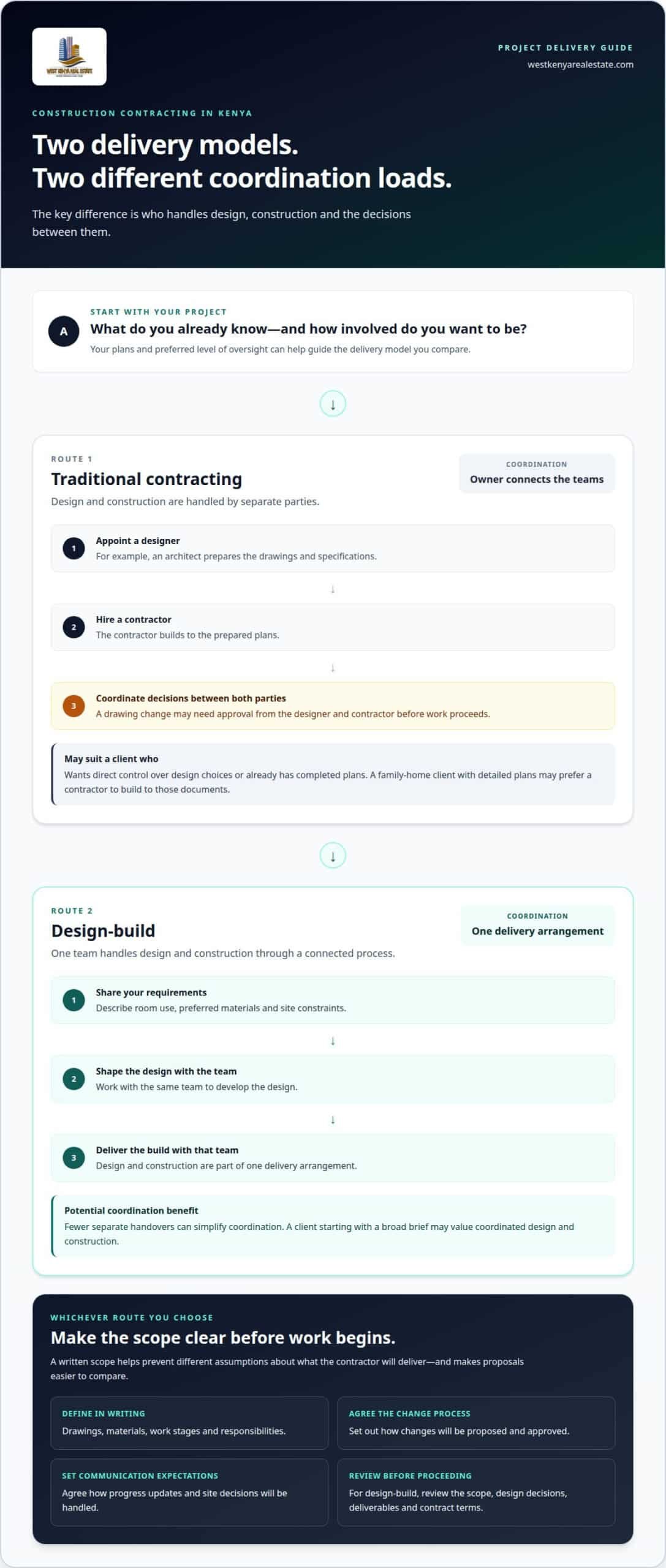
Traditional contracting separates design from construction. The owner appoints a designer, such as an architect, to prepare drawings and specifications, then hires a contractor to build to them. This can suit someone who wants direct control over design choices or already has completed plans. It also means the owner coordinates decisions between the design team and contractor. For example, a drawing change may need approval from both before work proceeds.
With design-build, one team handles design and construction through a connected process. The owner shares requirements, such as room use, preferred materials and site constraints, then works with the team to shape the design and deliver the build. Fewer separate handovers can simplify coordination. The owner still needs to review the scope, design decisions, deliverables and contract terms before work begins.
Compare the two models by asking who prepares drawings, manages construction and handles design changes. In a traditional contract, these duties sit with separate parties; in design-build, they are part of one delivery arrangement. A client with detailed plans for a family home may prefer a contractor to build to those documents. Someone starting with a broad brief may value coordinated design and construction.
Whichever route you choose, define the project scope in writing. Record the drawings, materials, work stages, responsibilities and process for approving changes. A clear scope helps prevent different assumptions about what the contractor will deliver. Also agree on how progress updates and site decisions will be handled. These details make proposals easier to compare than headline descriptions alone.
A construction company in Kenya may work under either model, so match its role to your project and your preferred level of involvement. If you’re weighing a joined-up delivery approach, review construction project options as part of your comparison.
3. Choosing a construction company
Start by assessing each company’s fit for your project. Compare completed work by building type, scope and delivery model. A firm experienced in residential buildings may be a better match for a home than one whose portfolio focuses on other work. Look for clear examples that explain the company’s role, not just photographs of finished structures.
How can you verify a construction company is registered in Kenya? Check its NCA certification before hiring, as advised for construction companies in Kenya. Match the registered business name to the name on the proposal and contract, and check that the registration category aligns with the work being offered.
Which Kenyan construction companies are registered with the NCA? Registration applies to individual companies, so consult the NCA’s current records to identify firms and confirm each firm’s status. Don’t assume a company is registered simply because it advertises construction work or has completed visible projects.
Review the proposal before agreeing to proceed. Make sure it identifies the project scope, drawings, materials, work stages, payment points and process for approving changes. Compare proposals based on the same scope, since different assumptions about finishes or included work can make headline totals misleading. Keep agreed revisions in writing.
Then assess communication and project control. Identify who will manage site decisions, report progress and coordinate the people involved. Ask for a clear explanation of how the company handles changes, delays and disagreements. A named contact and written reporting process help you track decisions instead of relying on informal conversations.
What are the risks of hiring an unregistered construction company in Kenya? You may have less assurance that the contractor meets the registration standard for the work. Weak documentation or unclear responsibilities can also make project disputes harder to manage. Confirm registration and put the scope, payment terms and change process in writing before work starts.
4. What are the top construction companies in Kenya?
There isn’t one useful ranking for every project. A firm’s fit depends on the work you need, such as a home, commercial building, or infrastructure job. Compare companies by documented project examples, their role on each job, and the type of construction they handle. A familiar name alone doesn’t show whether its experience matches your plans.
Kenya’s construction sector includes businesses with different roles. East African Portland Cement Company was incorporated in Kenya in February 1933. Athi River Mining Ltd, or ARM, was founded in 1974. These names help illustrate the sector’s history, but a cement company isn’t automatically the building contractor responsible for delivering your project.
That distinction matters when building a shortlist. Separate contractors that carry out building work from companies focused on construction materials or other parts of the sector. Then compare relevant portfolios. For a family home, look for residential construction examples; for commercial premises, focus on comparable buildings and clearly described project responsibilities.
Check each company against the same practical points: project type, design and construction responsibilities, completed work and progress management. Review references tied to specific jobs rather than relying on broad claims. A contractor that can explain its role, scope and delivery process gives you more useful information than a name on a general industry list.
Also distinguish company history from current suitability. LafargeHolcim was formed through a merger of Lafarge and Holcim in 2015, but that corporate milestone doesn’t establish which company will suit a particular Kenyan building project. Match the firm’s actual role and relevant experience to your site, design and required work.
Build your shortlist around project fit, not a league table. Compare like-for-like proposals and documented examples, then assess which company’s responsibilities match the level of coordination you want. This gives homeowners and commercial clients a more dependable basis for choosing than an unsupported “top” label.
The companies mentioned include East African Portland Cement Company, Athi River Mining Ltd (ARM) and LafargeHolcim, but they are not presented as a ranking of top building contractors. Compare firms by relevant project experience and the role they would perform, since companies in the sector may focus on materials rather than carrying out building work.
West Kenya Real Estate: Construction
West Kenya Real Estate Ltd provides construction for residential and commercial building projects. Its design-and-build service brings design and construction together in a coordinated process. This can suit project owners seeking support from planning through building work.
For needs beyond construction, West Kenya Real Estate Ltd also provides property management, valuation and sales services. These may fit when your next step is managing a property, assessing its value or preparing it for sale. Choose the support that matches your current project.
Share your project requirements with West Kenya Real Estate Ltd to discuss construction or related property services. Contact West Kenya Real Estate Ltd to get started.
Move your project from idea to action
Turn your project idea into a working brief. Identify what you want built, how the space must function and which decisions remain open. Note the site context, preferred design direction and what you expect the finished project to support. This gives discussions with a construction company in Kenya a practical starting point, keeps your priorities clear and helps you explain the project as plans develop.
West Kenya Real Estate offers construction for building projects, alongside management and valuation. Construction supports a build, while management and valuation address other property needs. Prepare a short outline of the intended work and the decisions you want support with. This keeps the first conversation specific and focused on your needs. Contact West Kenya Real Estate today to discuss your project. Take the next step with a clear brief.
Frequently Asked Questions
What construction services do companies in Kenya offer?
A construction company in Kenya may handle building work, design coordination, site supervision or a complete design-and-build project. Some companies also provide project management, property maintenance, valuation, sales assistance or house plans. A homeowner seeking a finished house may need design and construction, while an owner of an existing building may need maintenance. Match the service scope to your project.
How much do construction companies charge in Kenya per square metre?
There isn’t one per-square-metre charge for every building project in Kenya. The price depends on design, materials, site conditions, finishes and the work included, and is provided after a quote request. To compare estimates, use the same drawings, specifications and scope. Check, for example, whether flooring, plumbing and electrical work are included before treating two quotes as equivalent.
How do I compare construction company quotes and contract terms in Kenya?
Compare quotes against the same project brief, and note exclusions and assumptions separately. A construction company in Kenya should clearly set out its responsibilities and contract terms. Review payment stages, design changes, material substitutions, site access and completion records. If one estimate excludes kitchen fittings while another includes them, account for the difference. Keep the approved drawings, contract and written change approvals together.
How do I hire a reliable contractor in Kenya, step by step?
First, define the building type, site and required scope. Then shortlist firms whose completed work fits your needs and verify their NCA registration. Request written proposals based on the same brief, then compare responsibilities, exclusions and payment terms. Before work begins, agree on the contract, reporting arrangements and how changes will be approved. Keep copies of signed documents and project decisions as work progresses.