Discover the top 10 fastest-growing real estate towns in Kenya for 2025. Compare price trends, ROI potential, and emerging property markets in Ruiru, Kitengela, Juja, and more. Get investor checklists, financing tips, and safe-buying guidance for locals and diaspora buyers.
Introduction
Kenya’s property market is evolving fast, and buyers are shifting focus from Nairobi’s centre to new, high-growth zones. The fastest-growing real estate towns in Kenya now offer better affordability, solid infrastructure, and impressive ROI potential. In this guide, you’ll discover the top 10 emerging property markets, learn what’s driving growth, and get a practical checklist to invest wisely in 2025
How We Selected These Towns (Methodology & Data)
Metrics Used: Price Growth %, Transaction Volume, New Infrastructure, Rental Demand, Employment Hubs
To identify the fastest-growing real estate towns in Kenya, we analysed several key performance metrics. These included:
- Property price growth (%) across land, residential, and commercial sectors.
- Transaction volumes showing active buying and selling trends.
- New infrastructure projects, such as highways, bypasses, and industrial parks.
- Rental demand and yields in both residential and mixed-use areas.
- Proximity to employment hubs, schools, and major transit routes that attract tenants and buyers.
These indicators help separate short-term spikes from truly sustainable property growth.
Data Sources & Dates (Estate Sites, Government Infra Announcements, Q1–Q3 2024–2025 Reports)
Our findings draw from verified real estate platforms like Property24 Kenya, BuyRentKenya, and HassConsult’s Q1–Q3 2024–2025 market reports. We also reviewed government infrastructure announcements, county development plans, and Central Bank data on lending and housing activity.
This blend of public and private data ensures the ranking reflects both market momentum and long-term investment stability.

Quick Investor Checklist (Downloadable PDF/CTA)
Title & Documentation Verification (KRA PIN, Search at Lands Office)
Before investing in any of the fastest-growing real estate towns in Kenya, always start by confirming ownership details. Verify the title deed at the local Lands Office, cross-check the seller’s KRA PIN, and ensure the property’s details match the official land registry.
A quick title search can prevent costly disputes later and confirm that the land isn’t under legal charge or double ownership.
Developer Reputation & Planning Approvals
Only work with reputable developers who have completed verified projects. Ask to see the county planning approvals, NEMA clearance, and architectural drawings if you’re buying off-plan or in a gated community.
This helps confirm the project follows zoning laws and has the necessary permits for utilities, drainage, and access roads.
Typical Red Flags (Fake Title, Inconsistent Boundaries, Conditional Permits)
Beware of common warning signs like fake or photocopied title deeds, inconsistent land boundaries, or sellers refusing to provide full documentation. Also, check for conditional permits that may restrict development or resale in certain zones.
If any of these appear, consult a land surveyor or property lawyer before proceeding.
Market Signals That Mean “Fast Growth” (How to Spot Momentum)
Transport Links & Bypasses (Examples & Timeline)
Strong transport connections are one of the clearest signs of a fast-growing real estate town in Kenya. New bypasses, rail stops, and road upgrades attract developers and buyers quickly. For instance, the Eastern Bypass expansion has boosted Ruiru and Kamakis, while the Kenol–Sagana–Marua dual carriageway is transforming Murang’a’s appeal.
When evaluating a town, check for recently launched or ongoing projects—these often signal future price surges.
Major Employers & Industrial Projects (Konza, Naivasha Plants, New Campuses)
Towns near new employment zones often experience rising housing demand. The Konza Technopolis continues to boost property values in Machakos and Makueni, while Naivasha’s industrial plants and logistics hubs are attracting middle-income tenants.
Similarly, new university campuses in Juja and Eldoret increase student rentals and commercial activity—both key growth indicators for investors.
Utility Rollouts, Schools, Hospitals and Retail Anchors
Reliable infrastructure and social amenities are magnets for investors. When power, water, and internet services reach new zones—followed by schools, hospitals, and malls—property demand rises sharply.
Examples include the Two Rivers and Imaara retail zones, which have reshaped nearby neighbourhoods into high-value property clusters.
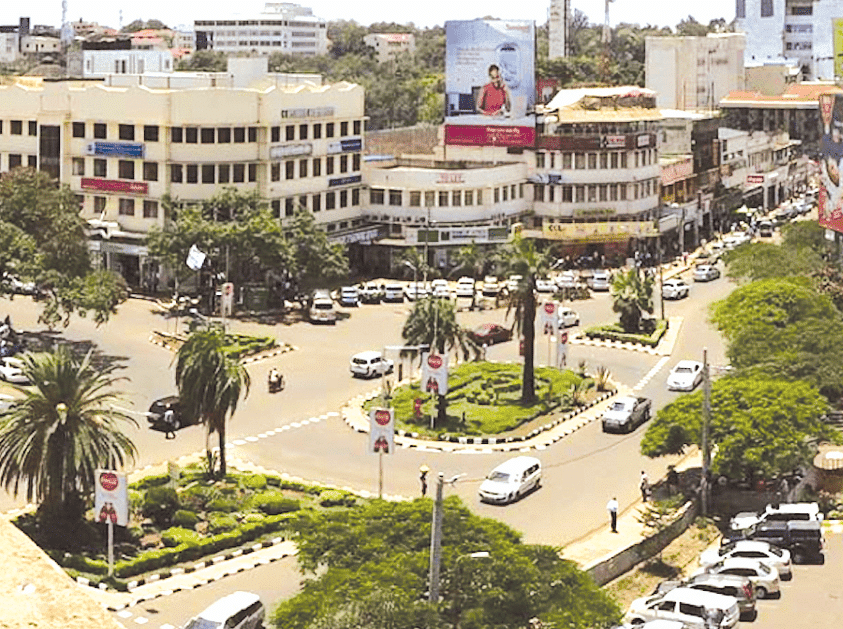
Top 10 fastest-growing real estate towns in Kenya — ranked (consistent micro-structure for each town)
Town 1: Ruiru — snapshot (why growing; typical property types; avg entry price band; expected yields; nearby projects)
Ruiru sits close to Nairobi and benefits from major roads and large developments like Tatu City. It’s a top pick among the fastest-growing real estate towns in Kenya thanks to commuter demand and new gated estates.
Why-buy signals:
- Proximity to the Nairobi Expressway and Thika Road links.
- Strong developer activity (gated communities, mixed-use projects).
- High rental demand from commuters and factory workers.
Data: Price range (¼ acre plots / starter apartments), Avg yield estimate, 12–24 month trend (steady appreciation).
Town 2: Kitengela — snapshot (incl. short-let/Airbnb potential)
Kitengela is affordable and expanding fast, attracting young families and returnees. The town also shows emerging short-let and Airbnb potential near commercial hubs and highway junctions.
Why-buy signals:
- Lower entry prices than Nairobi with rising demand.
- Good access to the airport and commuter routes.
- Growing rental market for workers and small businesses.
Data: Price range (plots & small apartments), Avg yield estimate, 12–24 month trend (strong upward momentum).
Town 3: Juja — snapshot (university-driven demand)
Juja’s proximity to JKUAT and other colleges creates steady student and staff housing demand. This makes Juja one of the reliable emerging property markets in Kenya for mid-term investors.
Why-buy signals:
- Constant demand for student housing and furnished units.
- New road links improving commuter times to Nairobi.
- Nearby commercial growth supporting services and rentals.
Data: Price range (plots near campus / bedsitters), Avg yield estimate, 12–24 month trend (consistent rental growth).

Town 4: Thika — snapshot (industrial & commuter appeal)
Thika’s industrial parks and manufacturing hubs create stable rental and commercial tenancy. Its commuter appeal makes it one of the best towns to invest in Kenya for predictable income streams.
Why-buy signals:
- Presence of factories and steady local employment.
- Good road connectivity to Nairobi and central Kenya.
- Increasing demand for workers’ housing and retail services.
Data: Price range (residential plots & small commercial units), Avg yield estimate, 12–24 month trend (steady).
Town 5: Ngong / Rongai — snapshot (amenities & lifestyle pull)
Ngong and Ongata Rongai attract buyers seeking lifestyle benefits near the city. These towns mix lifestyle living with commuter convenience, making them strong satellite towns near Nairobi.
Why-buy signals:
- Growing malls, schools, and leisure facilities.
- Cooler climate and lifestyle appeal for families.
- New road upgrades improving travel times.
Data: Price range (family plots / apartments), Avg yield estimate, 12–24 month trend (growing).
Town 6: Naivasha — snapshot (tourism + industrial corridor)
Naivasha combines tourism demand with industrial growth around the lake and SGR corridor. Investors find both short-let tourism returns and longer-term industrial-driven rentals here.
Why-buy signals:
- Tourism spikes in holiday seasons (short-let upside).
- Logistics and industrial projects near the SGR corridor.
- Affordable land with improving services.
Data: Price range (holiday plots / small lodges), Avg yield estimate, 12–24 month trend (volatile seasonally, overall upward).
Town 7: Konza / Machakos corridor — snapshot (tech corridor potential)
Konza’s tech ambitions make it a long-term speculative play. Early investors here target large capital gains if the Konza Technopolis and supporting infrastructure scale as planned.
Why-buy signals:
- National backing for tech infrastructure and special economic zones.
- Land availability for large-scale developments.
- Potential for corporate campuses and staff housing.
Data: Price range (speculative land parcels), Avg yield estimate (long-term), 12–24 month trend (speculative appreciation).

Town 8: Kisumu outskirts / Lakeside nodes — snapshot (regional hub growth)
Kisumu’s upgrades—airport works and lakeside developments—are attracting mixed-use projects. The outskirts offer cheaper entry with growing demand from regional trade.
Why-buy signals:
- Airport improvements and port-linked logistics.
- Demand for mixed-use and rental properties.
- Waterfront leisure developments boosting short-let income.
Data: Price range (plots & apartments), Avg yield estimate, 12–24 month trend (positive).
Town 9: Mombasa / South Coast (Diani, Vipingo) — snapshot (coastal tourism investment)
Coastal towns like Diani and Vipingo remain top choices for short-let investors and holiday-home buyers. Tourism recovery often equals strong seasonal occupancy and rental rates.
Why-buy signals:
- High short-let occupancy during peak seasons.
- Resort development and international interest.
- Diversified demand: holidaymakers and long-term residents.
Data: Price range (holiday homes & villas), Avg yield estimate (seasonal), 12–24 month trend (tourism-driven recovery).
Town 10: Eldoret/Nakuru (pick one depending on data) — snapshot (agri-trade & logistics)
Eldoret and Nakuru offer regional trade and agricultural value chains that sustain steady property demand. Choose between them based on logistics access and specific sector growth.
Why-buy signals:
- Strong agricultural and logistics economies.
- Growing middle-class demand for housing and retail.
- New road links improving inter-regional trade.
Data: Price range (residential plots & town apartments), Avg yield estimate, 12–24 month trend (stable to growing).

Comparative table & interactive map (visuals you can scan)
How to read the table: price bands, yield estimates, liquidity score, risk rating
This section explains how to use the comparative snapshot (not a full table) and the interactive map to compare the fastest-growing real estate towns in Kenya. Read price bands as entry-cost ranges, yield estimates as expected rental or short-let returns, liquidity score as how fast a property can sell, and risk rating as the chance of delays or title problems. Use these four signals together to match a town to your budget and exit plan.
Download CSV / embed interactive map CTA
Use the downloadable CSV or the interactive map to filter towns by price band, yield, and risk. The CSV lets you sort by entry price or projected yield while the map shows real projects and major infrastructure nearby. Click the CTA to export the data and plan a short list of towns that match your investment horizon.
Best property types by town & investment strategy
Plots vs. apartments vs. short-let vs. commercial — which towns suit which type
Different towns suit different property types in Kenya’s emerging property markets. Buy plots in Ruiru, Konza fringe, and Kitengela for long-term capital gains. Choose apartments in Thika and Ngong for steady rental income. Pick short-let units in Naivasha, Diani, or Kisumu if you want seasonal Airbnb-style returns. Commercial units work best near industrial parks and new retail anchors.
Holding period scenarios: short (1–3 yrs), medium (3–7 yrs), long (7+ yrs)
Match your holding period to the town and property type. Short-term (1–3 years) can work for well-located short-let or quick-flip plots near completed roads. Medium-term (3–7 years) suits apartments and plots in towns with active infrastructure rollouts. Long-term (7+ years) is best for speculative land in zones like Konza where major projects may take time to mature. Plan exit strategies and financing around your chosen horizon.
Financing, Taxes & Costs (Practical Examples)
Mortgages vs. Cash: Sample Calculation for KES X Purchase (With Numbers)
When investing in property within Kenya’s fastest-growing real estate towns, choosing between cash and mortgage financing determines your total cost and long-term returns. For example, buying a KES 5 million apartment in Kitengela can play out in two ways:
- Cash buyer: You pay the full KES 5 million upfront and avoid interest. However, this locks your liquidity, reducing flexibility to diversify or handle emergencies.
- Mortgage buyer: With a 13% interest rate over 10 years, your total cost rises to around KES 8 million, but you can spread payments. If rent earns you KES 45,000 per month, it covers nearly 70% of the monthly repayment—effectively letting the property “pay itself off.”
Tip: Always factor in loan processing fees (1–2%), legal charges, and insurance premiums before signing a facility agreement.
Stamp Duty, Registration, Legal Fees, Taxes for Locals vs. Diaspora
Every property transaction in Kenya carries statutory costs that affect affordability. Typically, closing expenses range between 6–8% of the property value, covering:
- Stamp duty: 4% for urban land, 2% for rural.
- Legal fees: Usually 1–2% of the purchase price, guided by the Advocates (Remuneration) Order.
- Registration & search fees: Around KES 1,000–3,000 per transaction.
- Taxes: Rental income is taxed at 7.5% monthly for individuals under the simplified regime (as per 2025 KRA rules).
Diaspora buyers must also meet CBK and KRA compliance—including using verified remittance channels and proof-of-funds documentation. For transparency, ensure all payments go through an escrow account or a licensed developer.
Using SACCOs / Chamas for Pooled Investment
Pooling funds through SACCOs or chamas has become one of the most effective ways for Kenyans to enter real estate affordably. The concept works by allowing members to contribute regularly, accumulate capital, and buy property jointly.
Here’s how it helps:
- Shared risk & cost: Each member owns a percentage, lowering individual financial pressure.
- Bulk bargaining power: Developers often offer discounts for group purchases or early off-plan commitments.
- Structured ownership: Well-managed SACCOs register as legal entities, ensuring members receive titled shares or co-ownership certificates.
Before joining, review the SACCO’s registration status, audited statements, and bylaws. A clear exit policy and transparent accounting system are crucial to avoid disputes.

Legal & Due-Diligence Step-by-Step (Practical Checklist)
How to Do a Title Search (What Documents to Request)
A title search is the backbone of safe land investment. It verifies who legally owns the property and whether there are any existing disputes, loans, or restrictions attached.
To conduct a proper search:
- Obtain a copy of the title deed (freehold or leasehold).
- Visit the Ministry of Lands or eCitizen portal and request an official search using the title number.
- Confirm seller details match their KRA PIN and national ID.
- Request rates clearance and land rent clearance certificates from the county.
This process uncovers encumbrances, charges, or double registrations that could invalidate your purchase later.
Survey & Boundaries, Environmental Restrictions, County Approvals
After confirming ownership, physical verification ensures the land you’re buying is correctly positioned and legally compliant. Engage a licensed surveyor to identify:
- Boundary beacons and confirm alignment with the cadastral map.
- Encroachments: Whether the land overlaps with a road reserve or public utility plot.
- Environmental compliance: Obtain NEMA clearance if developing, and confirm the zoning category (residential, mixed-use, or commercial).
- County approvals: Secure building permits, architectural plan approvals, and ensure payment of rates.
Ignoring these checks often leads to disputes or demolition orders later.
Sample Clause to Include in an Agreement with Developer/Owner
When drafting or reviewing a sale agreement, it’s vital to protect your interests in case of delays or non-performance. A recommended clause might read:
> “Ownership transfer and final balance payment shall only occur upon verification of title authenticity, approval documents, and completion milestones as agreed.”
You can also include:
- Penalty clauses for delays beyond a set completion date.
- Refund terms if approvals are not obtained.
- Arbitration provisions to resolve disputes outside court.
Ensure your advocate witnesses the signing and that the agreement is duly stamped and registered.
Risks, Scams & How to Avoid Common Pitfalls (Data-Backed)
Infrastructure Delays and How to Validate Schedules
Infrastructure promises often drive property prices up — but not all are delivered on time. Always verify project timelines with official sources like KeNHA, KURA, or county infrastructure departments before buying near a proposed bypass, highway, or railway. Ask developers for written proof of nearby projects under construction, not just planned. Visiting the site or speaking with locals can reveal stalled or ghost projects.
Speculative Pockets vs. Organic Growth (How to Tell the Difference)
Some towns appear “hot” because of speculation — rising prices based on hype rather than actual demand. Organic growth, however, is supported by real infrastructure, job creation, and rental uptake. To tell the difference:
- Check transaction volume and occupancy rates, not just listings.
- Look for ongoing construction, retail openings, and school expansions.
- Verify if there are steady rentals or only plots changing hands.
Speculative markets cool fast once hype fades, so focus on areas with tangible development.
Exit Risk & Resale Liquidity — How to Stress-Test Your Buy
Every investment should have a clear exit plan. Before purchasing in the fastest-growing real estate towns in Kenya, ask:
- How long will it take to resell the property?
- Who is your future buyer — homeowners, investors, or developers?
- What’s the average time-on-market and resale margin for similar units?
Conduct mock listings on popular sites like BuyRentKenya or HassConsult to test liquidity. A property with few comparable sales or stagnant listing movement signals high exit risk.

Case Studies: 2 Real Deals (Numbers, Timelines, ROI)
Win: Completed Example (Purchase Price, Costs, Current Value, Yield)
In 2021, an investor bought a KES 4.8 million plot in Ruiru. Within two years, thanks to road upgrades and nearby residential developments, the plot’s market value rose to KES 7.2 million — a 50% gain. Development costs were minimal, and rental yields for nearby units reached 7–9% annually. Key success factors included proper title verification, choosing a serviced area, and early entry before price escalation.
Cautionary: What Went Wrong and Lessons Learned
A group of investors in Naivasha bought off-plan units in 2020 promising 12% returns. Construction stalled after developers failed to secure permits and financing. The investors’ funds were tied up for years, and resale demand was low. Lesson: never rely solely on developer promises — always confirm NEMA approval, county licenses, and project financing before paying deposits.
How to Buy Safely if You’re in the Diaspora (Step-by-Step)
Power of Attorney, Use of Reputable Law Firm, Escrow, Verifying Developer
For Kenyans abroad investing in the fastest-growing real estate towns in Kenya, appointing a trusted representative is crucial. Use a Power of Attorney (POA) to authorise a lawyer or close relative to handle searches, sign documents, and complete registration. Always work with a registered advocate under the Law Society of Kenya (LSK) who can verify titles and handle escrow payments.
Before wiring funds, verify the developer’s background through the National Construction Authority (NCA) or Kenya Property Developers Association (KPDA). Avoid paying directly to individuals — instead, use escrow accounts where money is only released after milestones are met..
Currency Transfer, Repatriation Concerns and KRA/CBK Notes
Foreign transactions must comply with Central Bank of Kenya (CBK) and Kenya Revenue Authority (KRA) regulations. Always declare large remittances and use licensed remittance partners or bank channels to avoid currency loss or freezing. Keep records of all transfers for tax reporting and future repatriation of returns.
Diaspora buyers should also consider exchange-rate fluctuations — converting funds during a weak shilling period can increase purchasing power. Check if your bank supports escrow foreign currency accounts for added transparency.
Extra Investor Tools & Resources (CTAs)
Downloadable: Pre-Purchase Checklist, ROI Calculator (Spreadsheet), Sample Sale Agreement
Investors can save time and reduce errors with free digital tools designed for Kenya’s market. The pre-purchase checklist helps confirm land ownership, approvals, and infrastructure access. The ROI calculator estimates rental yields, payback period, and capital growth based on town-specific data. You’ll also find a sample sale agreement vetted by lawyers for safe transactions.
These tools ensure every step — from selection to signing — is well-informed and data-backed.
Contact: Recommended Vetted Lawyers/Agents Directory (Affiliate/Lead-Gen Option)
Finding trustworthy partners is often the hardest step. To help, we’ve curated a directory of vetted property lawyers, land surveyors, and estate agents in key towns like Ruiru, Kitengela, Naivasha, and Kisumu. Each listing is verified for registration, experience, and client reviews.
Use this as your first stop before committing funds or signing agreements — reliable local guidance can save you from costly mistakes.

Conclusion — Best Short-, Medium-, Long-Term Picks (1–2 Crisp Recommended Towns per Horizon)
Kenya’s real estate growth is dynamic, and your best move depends on your investment horizon. For short-term gains (1–3 years), Ruiru and Kitengela stand out — both benefit from ongoing infrastructure, quick resales, and strong rental demand.
For medium-term returns (3–7 years), Naivasha and Konza/Machakos corridor offer excellent potential. As industrial and tech zones mature, property values are projected to climb steadily.
For long-term growth (7+ years), Kisumu outskirts and Diani/Vipingo Coast are poised to shine. These emerging property markets blend lifestyle appeal with tourism and regional development — ideal for sustained appreciation.
Overall, investing in the fastest-growing real estate towns in Kenya offers opportunities across every budget and timeline. Do due diligence, align your goals, and use the tools shared above to buy with confidence.