Building a house in Kenya from the diaspora is one of the most common goals we hear from Kenyans in the UK, the USA, Australia, Germany and the Gulf, and also one of the most feared. Almost everyone knows someone who sent money home for years and came back to a half-built shell, a different design from the one agreed, or nothing at all. The good news is that these failures follow a pattern, and the pattern can be broken with the right structure.
This guide sets out a safe, step-by-step process: checking the land, getting the right drawings and approvals, pricing the job properly, paying only for work done, and seeing your site every week without boarding a plane. It is the hub for our diaspora series and links to the detailed guides as they are published. It works best alongside our guide to design and build in Kenya, because a single accountable team is the simplest way to build from abroad.
Living abroad and planning to build at home? Get a free building quote (WhatsApp works from any country): WhatsApp 0789 217 685
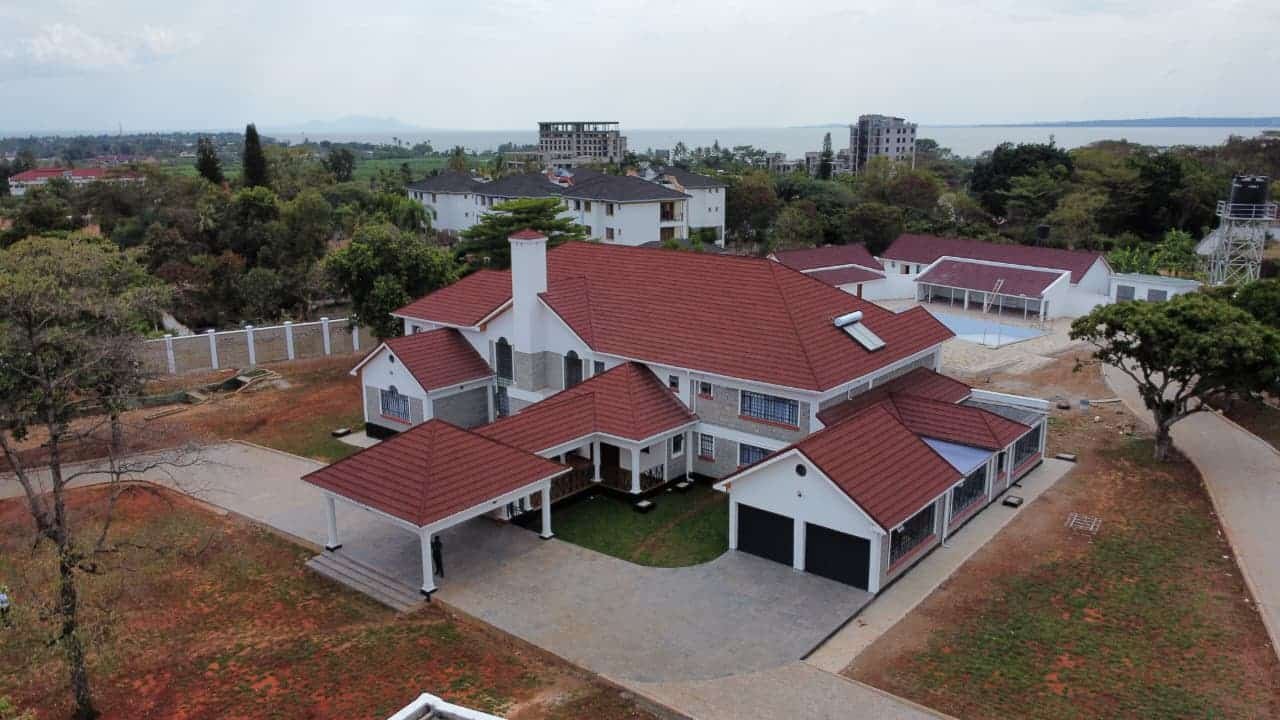
Why building from abroad goes wrong
Before the steps, it helps to be honest about the causes. In most failed diaspora projects, one or more of these was true:
- Money was sent before work was done. Lump sums for “the foundation” or “materials” with nothing to check against.
- There was no Bill of Quantities. Without a BQ, nobody can say what a stage should cost, so overspending is invisible.
- A relative or friend managed the site part-time. Even honest helpers lack the time and technical knowledge to check concrete, steel or levels.
- The land was not properly checked. Disputes over ownership or boundaries can stop a build after money has been spent.
- Progress reports were vague. “Work is going on well” is not a progress report. Dated photos, videos and measurements are.
- No approvals. Building without approved drawings risks penalties and makes later financing, valuation or sale harder.
Building a house in Kenya from the diaspora: the safe step-by-step process
Step 1: Verify the land before anything else
Whether you are buying a plot or building on family land, confirm who owns it, that the boundaries on the ground match the survey records, and that there are no disputes, charges or restrictions. Use an official search, a licensed surveyor to confirm the beacons, and, if you are buying, an independent valuer so you do not overpay. Our sister site explains the land buying process in Kenya step by step, and our guide to property valuation in Kenya explains why a buyer should commission their own valuation.
Step 2: Agree the design and get full drawings
Decide what you are building and why: a family home, a retirement home, or a house with rental units. Then get complete drawings: architectural plans, structural drawings and, ideally, electrical and plumbing layouts. A ready-made plan can save time and money; for example, a modern 3-bedroom bungalow house plan with DSQ gives a family home plus staff quarters that can house a caretaker while you are away. If you want changes, have them drawn before construction, never decided on site over the phone.
Step 3: Get county approvals
Submit the drawings for approval to the county where the plot is. Approval requirements and timelines differ between counties, so build this time into your plan. If you are building in Kisumu, our guide to building a house in Kisumu covers the local approval process and costs.
Step 4: Price the job with a Bill of Quantities
A BQ lists every item of work and material with quantities and rates. It turns the drawings into a budget you can check, and it is the only fair way to compare contractors. Insist that every quote you receive is priced against the same BQ.
Step 5: Choose one accountable contractor
From abroad, you cannot coordinate a separate architect, engineer, quantity surveyor, foreman and a dozen material suppliers. A design-and-build contractor takes responsibility for the design, the costing and the construction, so there is one party to hold to account. Whoever you choose, check that they are registered with the National Construction Authority, ask to see completed homes and speak to past clients, and sign a written contract that names the drawings, the BQ, the payment schedule, the reporting you will get and the handover date.
Step 6: Pay against milestones, not promises
Link each payment to a stage that can be seen and checked: setting out and foundation, slab, walling to ring beam, roofing, and the finishing stages. Release the next payment only when the photos, videos and measurements for the current stage are in and you are satisfied. Pay into the contractor’s company account, never into personal accounts of site staff, and keep every receipt. Some owners also pay large material suppliers directly against invoices.
Step 7: Supervise remotely, every week
Agree a fixed reporting rhythm before work starts. As a minimum, ask for:
- Weekly dated photos and short videos of the whole site, not just close-ups.
- A short written report: work done this week, work planned next week, any problems.
- Photos of steel before every concrete pour, with the bar sizes visible.
- A video call at each milestone so you can ask for the camera to be pointed where you want.
- Material delivery notes matched to the BQ.
If you can, plan a site visit at a key stage, for example during a December trip home. A visit at the slab or roofing stage lets you make decisions on finishes in person.
Step 8: Handover and snagging
Before the final payment, walk through the house (in person or on a detailed video call) with a snag list: doors and windows that do not close properly, tiling defects, plumbing leaks, electrical points. Agree a date for fixing them and a defects period after handover.
Watch: what a complete build looks like
This video follows a 5-bedroom house in Juja from start to finish. It is a good guide to the stages you should expect to see in your weekly updates.
How much does it cost in dollars or pounds?
Building costs are quoted in Kenya shillings, so your real cost moves with the exchange rate. The table below uses the 2025 rate for a standard bungalow published by Integrum (KSh 54,730 per m² in Nairobi and KSh 57,080 per m² in Western and Nyanza; Integrum calls these indicative planning figures, not quotations) and the Central Bank of Kenya indicative rates posted on 9 November 2026 (USD 1 = KSh 129.96; GBP 1 = KSh 173.75).
| Standard bungalow floor area | Western & Nyanza (KSh) | ≈ US dollars | ≈ UK pounds |
|---|---|---|---|
| 120 m² | 6,849,600 | 52,700 | 39,400 |
| 150 m² | 8,562,000 | 65,900 | 49,300 |
| 200 m² | 11,416,000 | 87,800 | 65,700 |
These figures cover the building only, not land, fees, approvals or external works, and the dollar and pound amounts will change as the exchange rate moves. Check the current rate on the Central Bank website before you budget. For a detailed four-bedroom example by size and finish, see our guide to the cost of building a 4-bedroom bungalow in Kenya.
Should you build rental units too?
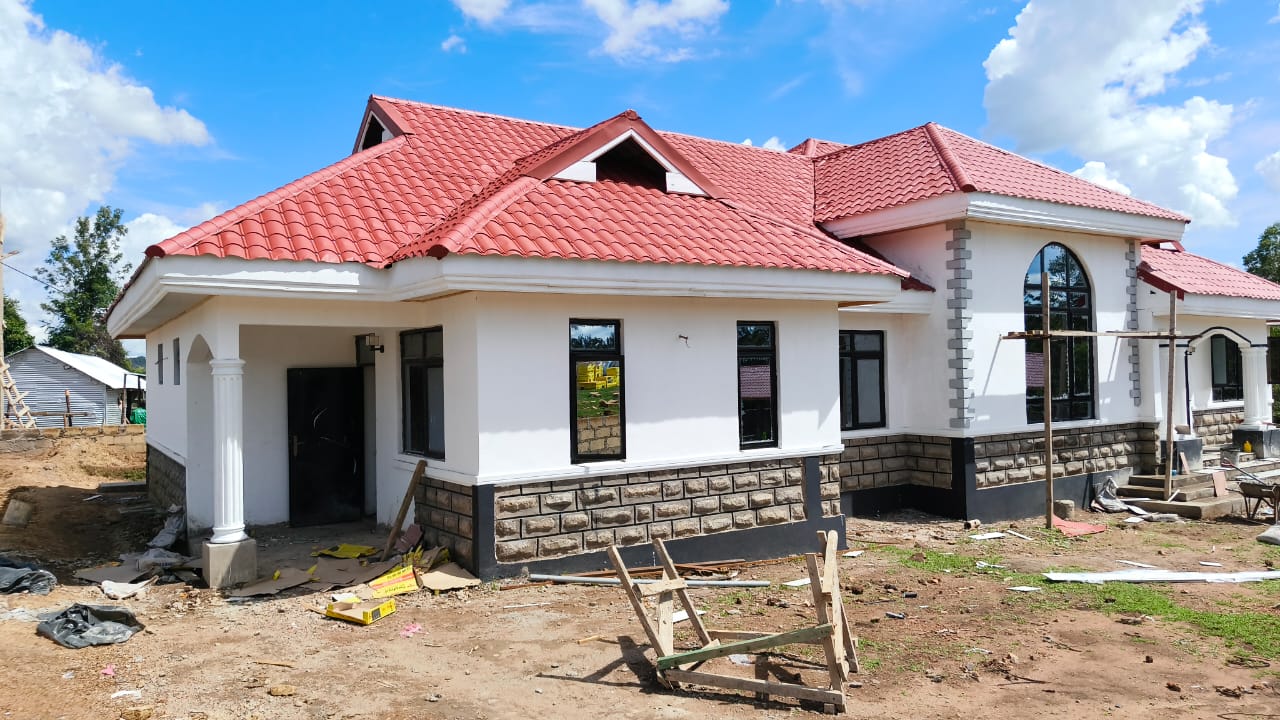
Many diaspora clients ask whether to add rental units on the same plot so the property earns while they are away. It can work well, but it is a business decision that needs its own numbers: demand in that town, rents, vacancy and running costs. Our sister site’s apartment construction guide is a good starting point. A house with a DSQ, such as a 4-bedroom maisonette design with DSQ, is a simpler first step.
Diaspora checklist before you send any money
- Land ownership and boundaries confirmed with an official search and a surveyor.
- Complete drawings in hand, and approval applied for or granted.
- A Bill of Quantities, and quotes priced against it.
- A written contract with a payment schedule linked to stages.
- A contractor registered with the National Construction Authority, with completed homes you can verify.
- Payments to a company account only, with receipts.
- A weekly reporting format agreed in writing.
- A contingency in your budget, plus a plan for exchange-rate movements.
Frequently asked questions
Can I start without visiting Kenya?
Yes. Land checks, design, approvals, pricing and construction can all be run remotely, as long as you have a trusted professional team and clear documents. Many owners visit once or twice during the build, usually at the slab or roofing stage and at handover.
Should a relative manage the build?
Relatives can be a great help with local errands and visits, but it is fairer to them, and safer for you, if the technical supervision and the money flow sit with a professional contractor under a written contract. Your relative can then act as an extra pair of eyes.
How do I talk to you from abroad?
WhatsApp works from any country at no extra cost on Wi-Fi. We usually reply between 5 am and 11 pm East Africa Time (EAT, GMT+3). In winter, that is 2 am to 8 pm UK time and 9 pm (previous evening) to 3 pm US Eastern time, so UK mornings and US East Coast mornings are good times to message.
Related guides
- Design and build in Kenya: one contractor from plan to handover
- Building a house in Kisumu: costs, approvals and contractors
- Property valuation in Kenya: process, fees and choosing a valuer
- Land buying process in Kenya, step by step
Building at home from abroad?
Send us your plot location, the house you have in mind (or a plan you like) and your budget. We will reply on WhatsApp with a free building quote and explain how milestone payments and weekly photo and video updates work. We reply 5 am to 11 pm East Africa Time.
Or call 0789 217 685 / 0724 481 087.